
What will help us during our lockdown? At the end of March, the Washington Post published that 1.5 billion children are out of school worldwide. Consider how many teachers and parents are represented by the statistic.
Schooling is experiencing an extraordinary disruption and, as usual, our Learn Forward school leadership is asking, “What matters most?” Of course, our answer, “Student learning.” So, we are re-working and expanding the definitions. We know learning is a journey and so it is natural to go back and re-discover, “What is student learning?”
Nourishing the Learning Spirit
Canadian academic and member of the Mi-Kmaw nation, Dr. Marie Battiste writes about decolonizing our educational system. British Columbia (min 51:27) has a priority on this process. Possibly, we have never had a greater opportunity. She advocates for the Indigenous spirit of reciprocity in learning, place-based learning, and nourishing the learning spirit.
Deeply held within Indigenous cultures is the sense of connection. Battiste suggests learners should be connected to themselves, to their families, to their communities, to the places where they live. This connection fosters a sense of belonging in a child’s heart.
For Indigenous peoples, place-based learning would include a connection to the eco-system, weather, the plants, animals, landforms, etc.. Possibly the best learning is within the local mountains, observing the creek, the gardens, the wildlife. Nature can take the role of the teacher.
And, let’s think even more broadly…
[fusion_builder_container hundred_percent=”yes” overflow=”visible”][fusion_builder_row][fusion_builder_column type=”1_1″ background_position=”left top” background_color=”” border_size=”” border_color=”” border_style=”solid” spacing=”yes” background_image=”” background_repeat=”no-repeat” padding=”” margin_top=”0px” margin_bottom=”0px” class=”” id=”” animation_type=”” animation_speed=”0.3″ animation_direction=”left” hide_on_mobile=”no” center_content=”no” min_height=”none”]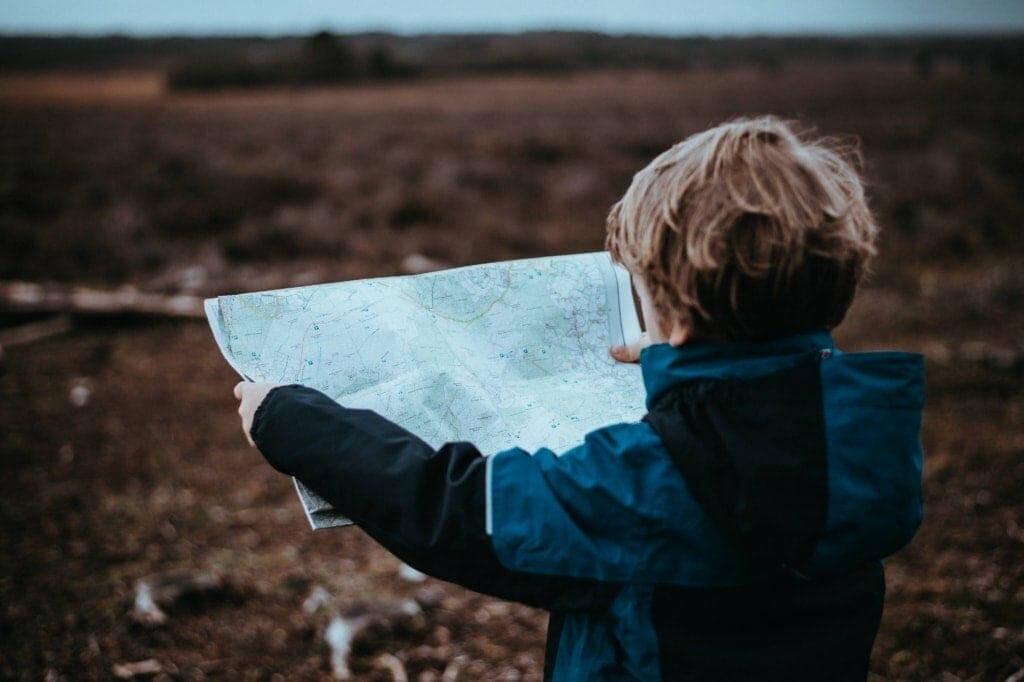
[/fusion_builder_column][fusion_builder_column type=”1_1″ background_position=”left top” background_color=”” border_size=”” border_color=”” border_style=”solid” spacing=”yes” background_image=”” background_repeat=”no-repeat” padding=”” margin_top=”0px” margin_bottom=”0px” class=”” id=”” animation_type=”” animation_speed=”0.3″ animation_direction=”left” hide_on_mobile=”no” center_content=”no” min_height=”none”]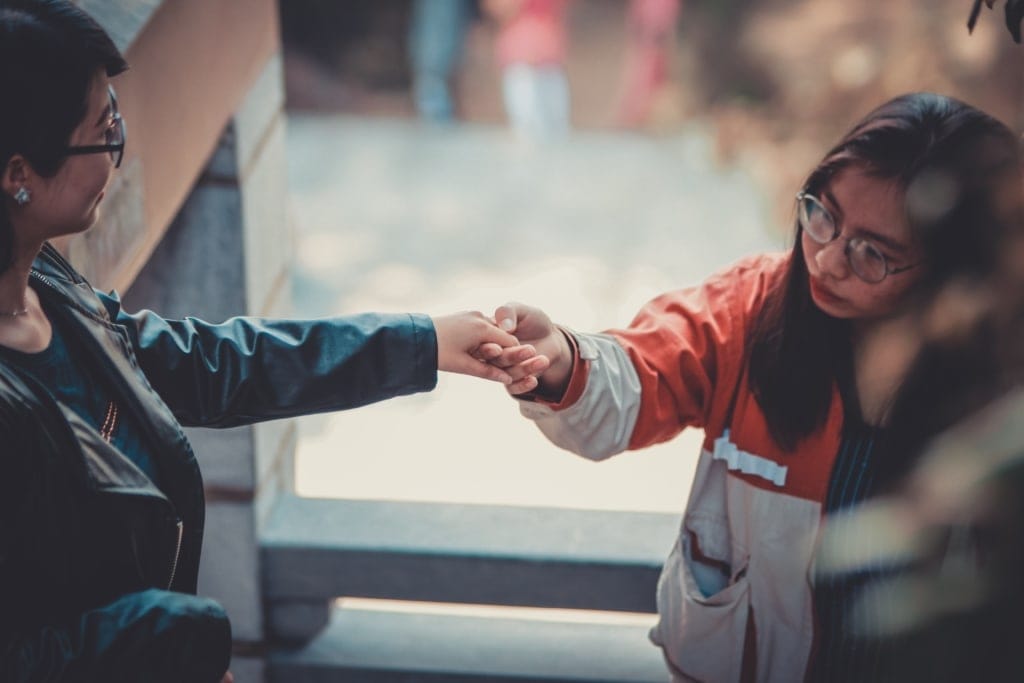
I think a clear question is what animates and enables the learning spirit within each child in his/her context?
What is your context? Your family values and faith? Or, your priorities during this season? What is unique about your home, community, and environment?
Place-based learning is powerful. What parents have to share is possibly more essential than the textbook. Are they seeing you work hard, juggle to cope, and do your best? Is your child witnessing your willingness to get up each new day and try again? What is unique at your “place” that is enriching your child’s life? Possibly there is an infant baby, or several boys who need vigorous play, or work that must take precedence over today’s bike ride. That’s your context. That’s your place.
Learning can and should happen here and the children’s learning is inextricably entwined within this context? Our First Peoples have modelled this principle for us.
How is this actionable? You are FREE to ask, “What is necessary for my child to learn in this place (and time)?”
For us, we need our little girl to grow in independence, we see the potential for her to learn in the kitchen by making salads and cakes, we want her to learn to love sitting in her bed and escaping life into a book. This is what she will learn in our context during this time.
And, if we can, we will definitely observe the eagle in his perch, pluck the plastic off the beach, and notice and name the birds, the trees, the grasses, and the insects.
Playful Spirit of Dewey
What if I told you the BEST way to maximize your young child’s learning during this time is to let them play?! Parents of young children are having a more difficult time. The structure is awkward and sitting in front of laptops is all wrong. One thing we know about learning is that play is one of the best avenues.
In a previous blog post, I invoked the work of Dr. Alison Gropnik, Berkeley researcher who posited in her 1996 paper that scientists are just big children at play. Research shows us that in play, children develop theories and test them. In fact, Dewey outlined the scientific method in his 1910 book, How We Think,
more or less clearly, five logically distinct steps: (i) a felt difficulty; (ii) its location and definition; (iii) suggestion of possible solution; (iv) development by reasoning of the bearings of the suggestion; (v) further observation and experiment leading to its acceptance or rejection; that is, the conclusion of belief or disbelief.
This initial definition of the scientific method outlines what all of humanity does to problem-find and problem-solve. Our current STEMx program (Science, Technology, Engineering, Math, and Design) in schools formally leans into what comes naturally for children.
Now, in the realm of eLearning, our Learn Forward school includes provocations in our “Explore Our World” (K-5) and “Learning in Depth” (Gr 6-9) to invoke this playful work and invite children into their own learning and making. These exploratory challenges are more than just “time-fillers,” they are intentional ways to invoke wonder, incite curiosity, and invite expressions of thinking and learning. Children are little scientists and so we invite this way of being forward.
These ideas are actionable in your home learning program! Let them play. Give them a cardboard box or a dirt pile or some flour and butter and let them be free. If they are interested in electric guitars or the poetry of T.S. Eliot, let them play.
Our expanded definitions of learning, don’t just work during COVID19 and on an eLearning template. They work ALL of the time. We are optimistic about how our Learn Forward experiences of our current educational disruption are uncovering the best of our learning journey.
[/fusion_builder_column][/fusion_builder_row][/fusion_builder_container]