
Our began with the definition of literacy as listening, speaking, reading, and writing. It is a broad definition highlighting some of the most important learning processes of early childhood (ages 0-7).
We explored the idea, “What if the entire purpose of early literacy learning is to infuse it with happiness?”
Learn Forward knows you want practical ideas and potentially generous permission to accept your child right where they are at developmentally, while still enjoying the joy of the story!

Here are the first five practical ideas to encourage playful literacy learning.
Play with Words, Letters, Sounds, and Shapes
It’s way beyond the Alphabet Song! One of the best ways for children to learn is through playful exploration of words, letters, sounds, and shapes. Here are some practical suggestions you may know, but just benefit from being reminded:
- nursery rhymes
- rhyming words
- magnet letters, flashcards, letter tiles, or an old scrabble game
- make letters out of play-do, your body, with a light saber, or with your finger on your child’s back
- have fun with myriad of alphabet books, read and re-read and re-read
- look for letters on car rides, switch it up and make new rules (i.e. look just for vowels or just for upper case letters)
- break simple words into their sounds “bath” becomes “b – a – th”
- clap or stomp syllables or sounds
- notice letters, words, and sounds in the books you read together
- make up silly, nonsense words
- explore lines and shapes, encouraging both visual discrimination and fine motor control
Play with Songs
Children are captivated by playing with songs! My little one came home last week singing “The Farmer-in-the-Dell” at the top of her voice and it continued for days. It was easy to see her following the order of the song and exercising her sense of story.
In terms of literacy learning, singing encourages the natural rhythm of spoken word, rhyme, and vocabulary development. Nursery rhymes are an excellent source of age-appropriate songs.
You can sing with actions, stop and allow the child to finish the line, or use songs to encourage daily routines.
A song encourages everyone to move into playfulness!
Play with Stories
Read simple and repetitive stories with young children. Read them over and over. Ensure the illustrations are captivating. Ask questions about what the story is about or invite your child to re-tell.
Another way to play with story is during family meals! If you’ve been part of our Learn Forward community, you know how much we discuss designing your home-life for thriving. Re-counting actual events, asking powerful questions, and sequencing a story offer a child authentic models of speaking and listening, which will directly impact their reading and writing motivation.
Treasure hunt for the best experiences of life to share!
It is easy to make meal-time conversation into a game encouraging the joy of story! Creating powerful narrative is a competency our children will need in the future.
If you aren’t sure where to begin once you sit down to dinner, check out this “We Talk a Lot…As a Value!” for some additional ideas.
Then, use bedtime, car rides or long waits in line to make up stories. Take turns, teach problem-solution, and use your imagination wildly!
Play with Notebooks
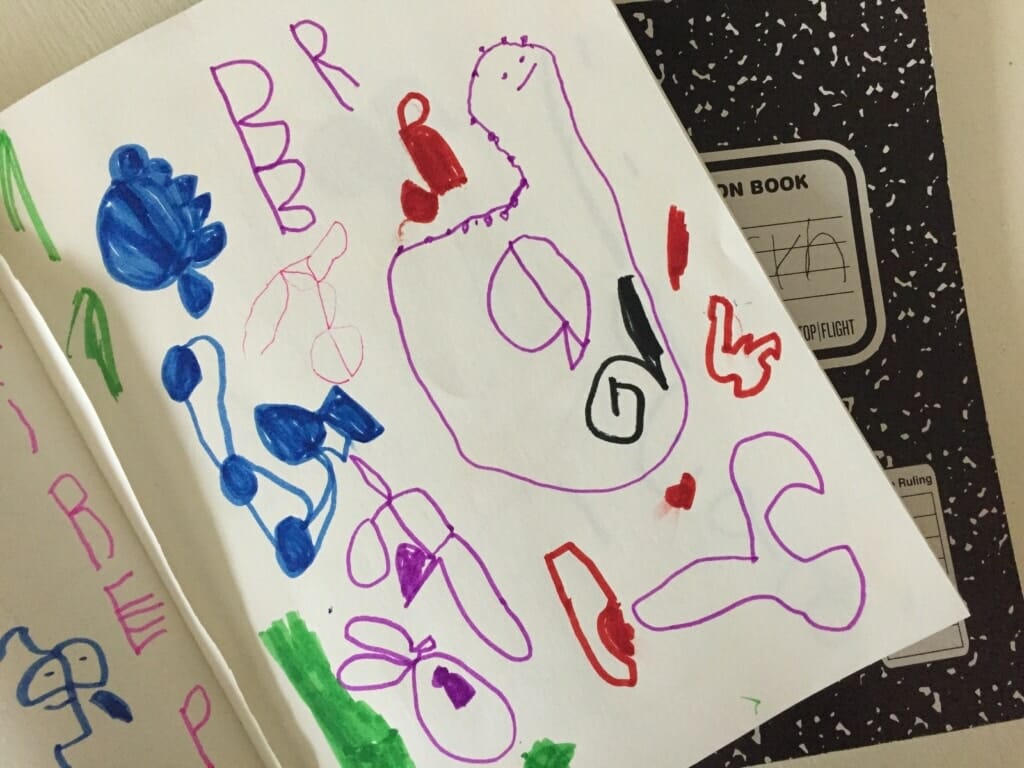
A powerful pre-writing tool are notebooks. Please allow children freedom in their notebooks to create, draw, write, and share their thoughts.
Lucy McCormick Calkins calls this the “writer-ly life” in her seminole work called, The Art of Teaching Writing. These initial attempts, approximations, and creative expressions need to be nurtured and validated by teachers and parents. We need to listen and explore journals with our children. My starter question is always, “Tell me about what you’re writing.”
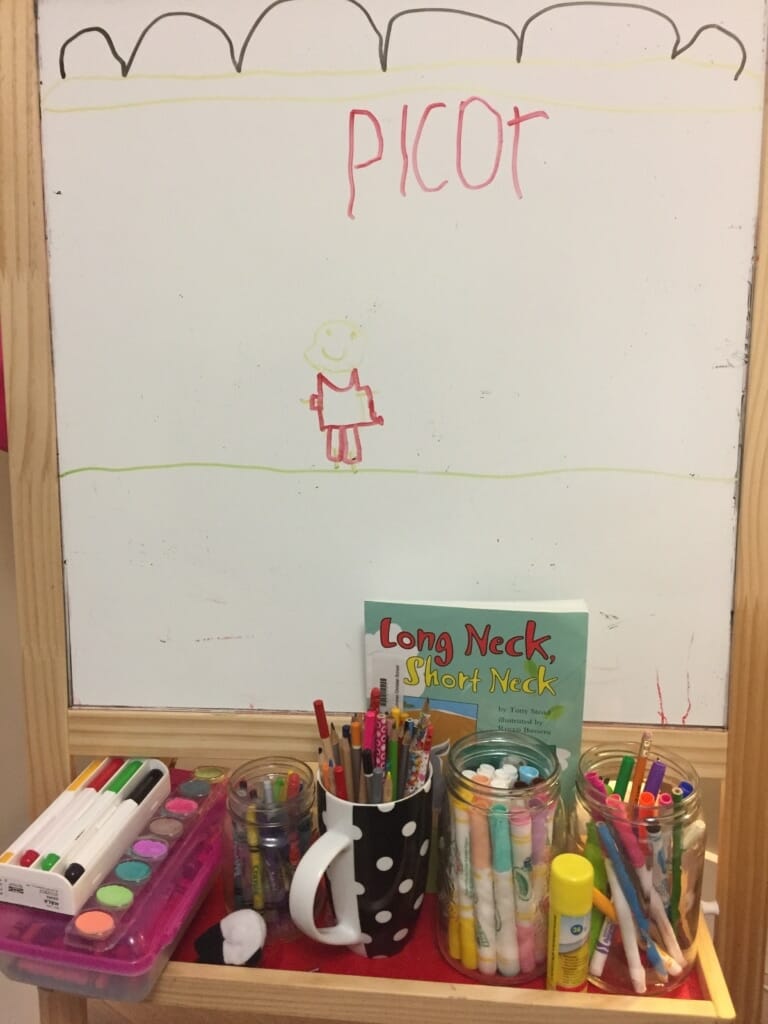
Create spaces in your classroom or home where children have lots of tools and opportunities for creativity! You’ll be surprised by how often your child chooses these activities.
Also, this doesn’t have to be a significant expense. You can even allow your child to make their own notebooks with simple paper and stapler. Personal places to write or sketch are powerful tools for early literacy.
These suggestions only are helpful if we begin to practice them in our classrooms or homes.
So, if you are you tired of reading, pinning, and hearing great ideas that don’t find their way into your routines, then Subscribe at Learn Forward this month to receive your FREE “Designing Your Playful Plan for Literacy” template. We created the tool to help you apply these practical ideas.